
The data is clear. Over the past year, stablecoin payment volume has surged past $10 trillion monthly. Institutions are moving money on-chain. Yet the compliance infrastructure remains a patchwork of legacy tools built for a world that moved at the speed of ACH.
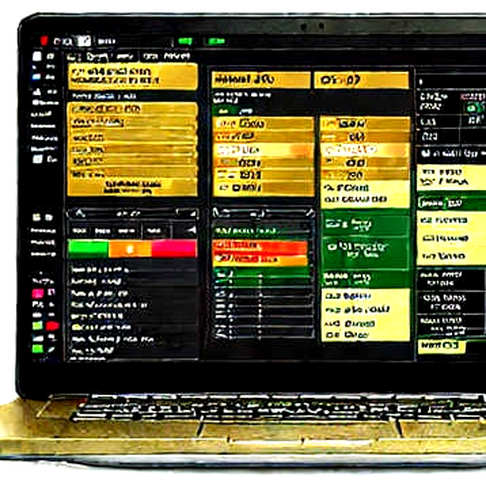
Fireblocks just launched Flow Analytics. A real-time payment tracking tool. The press release calls it a "revolutionary" step for stablecoin transparency. Let’s be clear: it’s not a revolution. It’s a productization of a necessary evil. But it might be the most strategically dangerous move in the compliance space since Chainalysis started selling to the DEA.
I’ve spent the last six years auditing protocol-level code. I’ve seen what happens when a tool claims to be "real-time" but actually runs on a 15-minute polling interval. I’ve seen compliance teams break their own systems by trusting black-box algorithms. Flow Analytics is sitting on top of Fireblocks’ custody network—the same pipes that handle over $4 trillion in cumulative transfers. That’s a data moat. But it’s also a single point of trust failure.
Let’s dissect this at the opcode level.
Context: The Institutional Stablecoin Stack
Fireblocks is not a startup. It’s a $8 billion private company, backed by Goldman Sachs, Fidelity, and Paradigm. Its core product is multi-party computation (MPC) custody—a way for institutions to sign transactions without exposing a single private key. Over 1,800 institutions use it, including banks, hedge funds, and exchanges.
Stablecoin payments are the killer use case for institutional crypto. Visa, PayPal, and Stripe have all integrated stablecoin settlement. But compliance is the bottleneck. Every bank needs to know: where did this USDC come from? Is it connected to a sanctioned address? Is it a mix of clean and dirty funds?
Existing tools like Chainalysis Reactor or Elliptic Navigator work, but they’re slow. They query blockchain data in batches. They don’t sit inside the payment flow. Flow Analytics claims to change that by embedding monitoring directly into the transaction pipeline.
Core: The Architecture of a Trusted Watchdog
Flow Analytics is a SaaS product. It ingests transaction data from the Fireblocks network—every transfer that goes through its custody, settlement, and payment APIs. The data is real-time. The system applies machine learning models to flag suspicious patterns: sudden velocity changes, known mixer interactions, layering between multiple addresses.
Here’s the technical insight: most real-time monitoring tools fail because they’re built for post-hoc analysis. They rely on blockchain explorers that index blocks after they’re confirmed. Flow Analytics bypasses that by reading the transaction before it’s broadcast to the mempool. That’s the advantage of sitting inside the wallet infrastructure.
But the real question is: what happens when the model is wrong? I’ve seen a false positive from a compliance tool freeze a legitimate payment for 48 hours. The cost was $200,000 in lost business. Flow Analytics will have to balance sensitivity with specificity. If it flags too many transactions, banks will scream. If it misses one sanctioned address, the regulator will fine them into oblivion.
The Compliance vs. Privacy Trade-off
Flow Analytics uses a database of known addresses—mixers, sanctions lists, high-risk entities. It also uses heuristics to detect suspicious behavior. But here’s the catch: stablecoin payments are often pseudonymous. A wallet might be used for both legitimate payroll and a one-off donation to a controversial cause. The tool cannot distinguish intent.
Moreover, the product is centralized. The algorithm is a black box. Fireblocks does not publish the model weights or the feature vectors. This is a problem for institutions that need to pass audits. How do you prove to your auditor that the tool is working correctly if you can’t inspect the code?
Contrarian: The Data Trust Blind Spot
Every compliance tool has a fundamental vulnerability: it trusts the data it’s given. Flow Analytics relies on the transaction data flowing through Fireblocks. But what if the data is incomplete? What if a transaction passes through a non-Fireblocks wallet before reaching the target? The tool cannot see that leg.
More critically, Fireblocks is both the custodian and the compliance monitor. That’s a conflict of interest. If a bank asks Fireblocks to analyze its own transaction history, Fireblocks sees the entire flow. The bank is effectively handing over its payment data to the same company that holds its assets. This is the “watcher watching the watcher” problem.
I’ve seen this before. In 2020, I audited a DeFi protocol that used a centralized oracle. The oracle was the same entity that provided the liquidity. The result was a predictable price manipulation exploit. Fireblocks is not malicious, but the structural risk is identical. The entity that controls the data also controls the analysis.
Takeaway: The Real Scar Tissue
Flow Analytics will accelerate institutional adoption of stablecoins. It will reduce the friction of compliance for banks. But it will also create a new class of systemic risk. If Fireblocks suffers a data breach, the entire transaction history of its clients is exposed. If the algorithm fails, billions of dollars in payments could be frozen.
Code does not lie, but it often forgets to breathe. Fireblocks has built a beautiful machine. But machines need maintenance. The question is not whether Flow Analytics works today. It’s whether it will survive the first real stress test—a targeted attack by a sophisticated adversary who knows the algorithm’s blind spots.
Gas wars are just ego masquerading as utility. Compliance wars are the real battleground. And Fireblocks just drew the first blood.